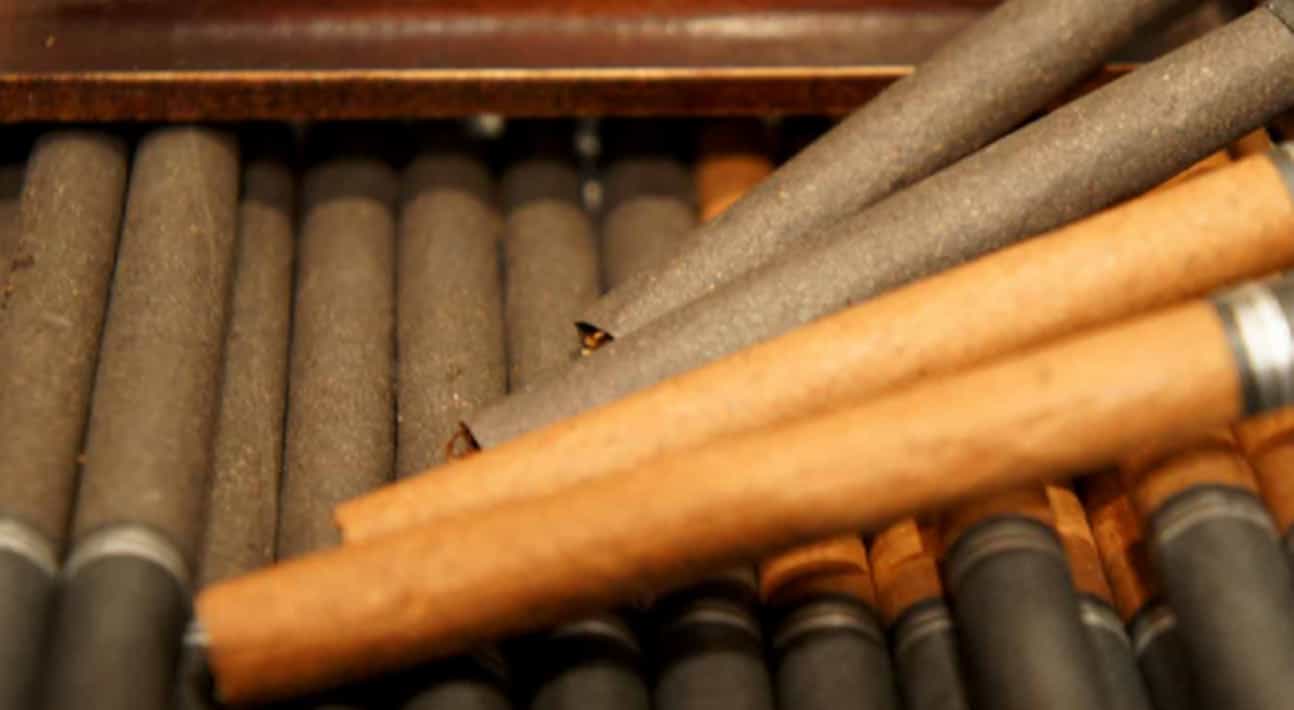
The global demand for Homogenized Tobacco Leaf is increasing due to its applications in heat-not-burn products and as an ingredient in lower nicotine-content products. The recon tobacco, closely related to HTL, has seen a growth in sales, particularly in the THP (Tobacco Heating Products) market. Innovations in this sector are aimed at offering alternatives to traditional high-nicotine products, with companies like 22nd Century leading the way in reduced nicotine options that cater to consumer demands for healthier alternatives.
Additionally, advancements in papermaking processes related to HTL have contributed to the development of special papers used in various packaging and security applications within the tobacco industry, highlighting the versatile uses of tobacco-derived materials beyond just smoking products.
These findings will be synthesized into the introduction for the article on the Interactivos.org blog, reflecting the latest innovations and market trends in the tobacco industry, particularly focusing on homogenized and recon tobacco products.
The world of Homogenized Tobacco Leaf is a journey worth embarking on. This tobacco-derived product, manufactured using the papermaking technique, is a blend of tradition and innovation. It’s the hidden gem of the tobacco world, showcasing the mastery and craft that goes behind each leaf. From the science behind its production to its economic impact, this leaf has it all. Whether you’re a connoisseur or a curious bystander, prepare to be intrigued by the fascinating world of Homogenized Tobacco Leaf.
Introduction to Homogenized Tobacco Leaf
Homogenized tobacco leaf is a fascinating product in the world of tobacco. It’s a blend of tradition and innovation, showcasing the mastery and craft that goes behind each leaf.
The History of Homogenized Tobacco Leaf
The history of homogenized tobacco leaf is as rich as the product itself. It’s a testament to the ingenuity of tobacco craftsmen who have continually sought to improve and innovate.
The Process of Homogenization
The process of homogenization involves a unique papermaking technique. It’s a meticulous process that requires skill, patience, and a deep understanding of the tobacco leaf.
The Art and Science Behind Homogenized Tobacco Leaf
The creation of homogenized tobacco leaf is both an art and a science. It’s a process that combines traditional craftsmanship with modern innovation.
The Craftsmanship Involved
The craftsmanship involved in creating homogenized tobacco leaf is a testament to the skill and dedication of the craftsmen. It’s a process that requires a deep understanding of the tobacco leaf and a passion for the craft.
Homogenized Tobacco Leaf market size
The global market size for Homogenized Tobacco Leaf (HTL) Cigars is projected to grow significantly in the coming years. While the exact figures vary across different sources, the consensus is that the market is expanding.
According to a report on LinkedIn, the HTL Cigars market size in the United States is expected to grow at a Compound Annual Growth Rate (CAGR) of % from 2021 to 2028 . The same report also mentions that the global HTL Cigars market is segmented by region, type, and application, indicating a diverse and dynamic market .
Another report on LinkedIn suggests that the HTL cigars market is expected to grow at a CAGR of % during the forecasted period, driven by increasing demand for affordable and convenient smoking options, as well as the rising popularity of flavored cigars among the younger generation .
A report from Industry Research Biz projects that the global HTL Cigars market size will reach a certain value by 2026, growing at a CAGR of XX% from 2021 to 2026 .
A report from Market Intellix indicates that the HTL Cigars market revenue was a certain amount in 2016, grew to a certain amount in 2020, and will reach a certain amount in 2026, with a CAGR of xx during 2020-2026 .
A report from Ken Research suggests that the global HTL Cigars market is expected to reach a certain value by 2027, with a CAGR of XX% from 2020 to 2027 .
A report from Benzinga indicates that the Thailand HTL Cigars market has grown from a certain value in 2017 to a certain value in 2022, and is estimated to reach a certain value in 2029 .
Finally, a report from Prof Research suggests that the global HTL Cigars market size was valued at a certain amount in 2018 and is projected to expand at a CAGR of a certain percentage from 2019 to 2025 .
Homogenized Tobacco Leaf for sale
Homogenized Tobacco Leaf (HTL) and related products are available for sale on various platforms. Here are some options:
- Homogenized Tobacco Leaf (HTL): This is the raw material used in the production of various tobacco products. It is not typically sold directly to consumers .
- HTL Cigars: These are cigars made using Homogenized Tobacco Leaf. They are available for purchase on various online platforms .
- Reconstituted Tobacco Leaf: This is a type of tobacco product made by processing tobacco leaves into a paper-like material. It is used in the production of cigarettes and other tobacco products .
- Molded Leaf: This is a type of tobacco product made by molding tobacco leaves into a specific shape. It is used in the production of cigars and other tobacco products .
- Homogenized Tobacco Material: This is a type of tobacco product made by processing tobacco leaves into a homogeneous material. It is used in the production of cigarettes and other tobacco products .
- Homogenized Tobacco Sheets: These are sheets of homogenized tobacco material. They are used in the production of cigarettes and other tobacco products .
- Homogenized Tobacco Powder: This is a type of tobacco product made by grinding tobacco leaves into a fine powder. It is used in the production of cigarettes and other tobacco products .
- Homogenized Tobacco Pulp: This is a type of tobacco product made by processing tobacco leaves into a pulp-like material. It is used in the production of cigarettes and other tobacco products .
- Machine-made cigars using HTL: These are cigars made using Homogenized Tobacco Leaf. They are available for purchase on various online platforms.
- HTL for binder and wrapper in cigars: This is Homogenized Tobacco Leaf used as a binder and wrapper in the production of cigars. It is not typically sold directly to consumers.
Homogenized Tobacco Leaf brands
Homogenized Tobacco Leaf (HTL) is used in various tobacco products, including cigars. Some of the brands that use HTL in their products include:
- 22nd Century Group: This company has successfully produced HTL sheet using VLN reduced-nicotine content tobacco. The HTL is used in heat-not-burn products and as the binder or wrapper for machine-made cigars .
- Pura Group: Pura Group is the first Homogenized Tobacco Leaf producer in the world outside the USA. They produce HTL Wrapper for the outer layer of cigars or little cigars and HTL Binder for the inner layer of cigars, binding tobacco filler .
- Fronto King: While Fronto King primarily uses natural tobacco leaf, they mention that other wraps and machine-made cigars often consist of synthetic/homogenized sheet papers .
- Swedish Match: Swedish Match holds a strong position within the HTL segment. Their HTL cigars brands include White Owl and Jackpot .
Homogenized Tobacco Leaf market trends
The market trends for Homogenized Tobacco Leaf (HTL) indicate a steady growth and expansion in the coming years. This growth is driven by a combination of continuous technological advancements, growing environmental awareness, and the rising need for streamlined operations. Industry players are anticipated to concentrate on product innovation, strategic collaborations, and geographical expansion to seize the evolving market opportunities .
The HTL Cigars market is segmented by region, type, and application, indicating a diverse and dynamic market. In the United States, the HTL Cigars market size is expected to grow at a Compound Annual Growth Rate (CAGR) of % from 2021 to 2028 . Globally, the HTL Cigars market revenue was a certain amount in 2016, grew to a certain amount in 2020, and will reach a certain amount in 2026, with a CAGR of xx during 2020-2026 .
The demand for reconstituted tobacco leaf (RTL), also known as homogenized tobacco, has held up remarkably well in recent years. In 2021, amid the Covid pandemic, the global RTL business grew by $8 million, according to Russian Tobacco Factory (RTF). And despite the political and economic upheaval in the wake of the Ukraine war, the upward trend continues, prompting some RTL companies to expand their production capacity .
In Thailand, the HTL Cigars market has witnessed growth from USD million to USD million from 2017 to 2022. With the CAGR, it is estimated to reach a certain value in 2029 . The global Homogenized Tobacco Leaf Cigars market is expected to reach USD XX Million by 2027, with a CAGR of XX% from 2020 to 2027 .
Changing lifestyle & consumer preferences and rising demand for affordable and convenient smoking options, as well as the rising popularity of flavored cigars among the younger generation, are also contributing to the market growth .
Homogenized Tobacco Leaf vs Natural Tobacco
Homogenized Tobacco Leaf (HTL) and natural tobacco differ in several aspects, including their manufacturing process, usage in cigars and other tobacco products, composition and ingredients, and flavor and smoking experience.
Manufacturing Process
The manufacturing process of HTL involves a papermaking technique where ground tobacco and a binder are mixed to form a slurry, which is then formed into sheets . This process creates a tobacco leaf that is more uniform and has greater mechanical resistance compared to whole tobacco leaves . On the other hand, natural tobacco is grown and harvested traditionally, and the leaves are air-cured or sun-cured depending on the desired taste profile .
Usage in Cigars and Other Tobacco Products
HTL is commonly used as the binder and wrapper in machine-made cigars due to its greater mechanical resistance and uniformity . It’s also used in heat-not-burn products . Some machine-rolled cigars also use HTL wrappers . Conversely, natural tobacco is used in handmade cigars, which are more labor-intensive and take longer to make .
Composition and Ingredients
HTL is a mixture of chopped scrap tobacco and a cellulose adhesive, which is extruded into a sheet that can be cut in any size . It’s made from tobacco dust, fines and particles, and leaf ribs and stems . Natural tobacco, on the other hand, is predominantly produced from Nicotiana tabacum, and the properties of the tobacco products depend on the locality of growth, position of leaves on the plant, and the curing process .
Flavor and Smoking Experience
The flavor and smoking experience also differ between HTL and natural tobacco. HTL cigars come in different market types to cater to diverse consumer preferences. Full flavor HTL cigars offer a rich and robust taste for those who enjoy a stronger smoking experience. Light HTL cigars are designed for individuals seeking a milder flavor profile. There are also menthol HTL cigars that provide a refreshing and minty taste . On the other hand, the flavor of natural tobacco is influenced by the soil and growing conditions where the tobacco was raised, as well as the harvesting, fermenting, blending, and aging processes the tobacco leaves are subjected to .
Homogenized Tobacco Leaf quality
The quality of Homogenized Tobacco Leaf (HTL) is determined by several factors, including the manufacturing process, the maturity of the leaves, and the presence of microorganisms.
The manufacturing process of HTL involves a papermaking technique where ground tobacco and a binder are mixed to form a slurry, which is then formed into sheets. This process creates a tobacco leaf that is more uniform and has greater mechanical resistance compared to whole tobacco leaves . However, the homogenization process can result in a more uniform flavor and burn but may compromise the complexity, aroma, and overall perceived quality of the cigar .
The quality of tobacco is mainly determined by the maturity stage of the leaves. Only mature leaves show the physical and chemical properties that are well appreciated by smokers and therefore, are requested by the tobacco industry. There are three main characteristics that define tobacco quality and maturity: color, texture, and aromas .
Microorganisms play an important role in the tobacco aging process. Studies have found that in tobacco leaves with good quality and aroma quality, there are more types and quantities of microorganisms .
HTL manufacturers are committed to quality management and environmentally friendly manufacturing practices. They partner with the world s leading authority in product testing and compliance to ensure the quality of their products .
However, it’s important to note that all tobacco products, including those made from HTL, contain many chemicals that can cause health issues. Smoke from all cigarettes, natural or otherwise, has many chemicals that can cause cancer (carcinogens) and toxins that come from burning the tobacco itself, including tar and carbon monoxide .
Homogenized Tobacco Leaf vs Rolled-Leaf Cigars
Homogenized Tobacco Leaf (HTL) and Rolled-Leaf Cigars differ in several aspects, including their manufacturing process, usage in cigars, composition and ingredients, and flavor and smoking experience.
Manufacturing Process
The manufacturing process of HTL involves a papermaking technique where ground tobacco and a binder are mixed to form a slurry, which is then formed into sheets. This process creates a tobacco leaf that is more uniform and has greater mechanical resistance compared to whole tobacco leaves.
On the other hand, Rolled-Leaf Cigars are made using whole tobacco leaves. The leaves are selected, sorted, and then rolled by hand or machine into the desired shape. This process is more labor-intensive and time-consuming compared to the production of HTL.
Usage in Cigars
HTL is commonly used as the binder and wrapper in machine-made cigars due to its greater mechanical resistance and uniformity. Some machine-rolled cigars also use HTL wrappers.
Conversely, Rolled-Leaf Cigars are typically handmade and use whole tobacco leaves for the wrapper, binder, and filler. The use of whole leaves is believed to provide a richer and more complex flavor compared to HTL.
Composition and Ingredients
HTL is a mixture of chopped scrap tobacco and a cellulose adhesive, which is extruded into a sheet that can be cut in any size. It’s made from tobacco dust, fines and particles, and leaf ribs and stems.
In contrast, Rolled-Leaf Cigars are made from whole tobacco leaves. The leaves are selected based on their size, color, texture, and flavor to create a balanced and enjoyable smoking experience.
Flavor and Smoking Experience
The flavor and smoking experience also differ between HTL and Rolled-Leaf Cigars. HTL cigars come in different market types to cater to diverse consumer preferences. Full flavor HTL cigars offer a rich and robust taste for those who enjoy a stronger smoking experience. Light HTL cigars are designed for individuals seeking a milder flavor profile.
On the other hand, the flavor of Rolled-Leaf Cigars is influenced by the specific blend of tobacco leaves used in the cigar. The wrapper, binder, and filler each contribute to the overall flavor of the cigar, creating a complex and nuanced smoking experience.
The Role of Innovation
Innovation plays a crucial role in the production of homogenized tobacco leaf. It’s what allows for the creation of a product that is both unique and high-quality.
The Unique Characteristics of Homogenized Tobacco Leaf
Homogenized tobacco leaf is known for its unique characteristics. It offers a variety of flavors and a unique smoking experience.
The Variety of Flavors
One of the most appealing aspects of homogenized tobacco leaf is the variety of flavors it offers. Each leaf has its own unique flavor profile, offering a unique smoking experience.
The Unique Smoking Experience
The unique smoking experience offered by homogenized tobacco leaf is one of its most appealing aspects. It’s a smoking experience that is unlike any other.
The Economic Impact of Homogenized Tobacco Leaf
Homogenized tobacco leaf has a significant economic impact. It contributes to the economic boost of tobacco-growing regions and has a promising future.
The Boost to Tobacco-Growing Regions
The production of homogenized tobacco leaf contributes to the economic boost of tobacco-growing regions. It’s a product that is in high demand, contributing to the economic growth of these regions.
The Future of Homogenized Tobacco Leaf
The future of homogenized tobacco leaf looks promising. With continued innovation and a growing demand, it’s a product that is set to continue its economic impact.
The Future of Homogenized Tobacco: Expanding Markets and Technologies in Russia
In Russia, the transition to sustainable tobacco production methods was marked by a significant expansion of the production capacity of the "Russian Tobacco Factory"(you can read what the future for homogenized tobacco is at this homogenized tobacco website). This trend is associated not only with meeting market demand, but also with the development of technological innovations to improve the efficiency and quality of tobacco products. The homogenized tobacco production process allows for the recycling of tobacco by-products, reducing waste and increasing product consistency, which is very important for industrial scale production.
Conclusion: The Intriguing World of Homogenized Tobacco Leaf
The world of homogenized tobacco leaf is a fascinating one. It’s a product that showcases the mastery and craft of tobacco craftsmen, offers a unique smoking experience, and has a significant economic impact. It’s a journey worth embarking on, whether you’re a connoisseur or a curious bystander.
Statistics:
In the United States, the Homogenized Tobacco Leaf (HTL) Cigars market size is expected to grow from USD million in 2021 to USD million by 2028, at a CAGR of % during the forecast period .
FAQs:
-
What is homogenized tobacco leaf?
Homogenized tobacco leaf is a paper-like material produced from finely ground tobacco . -
How is homogenized tobacco leaf made?
Homogenized tobacco leaf is made from a mixture of chopped tobacco pieces and a cellulose adhesive. Like making paper, it is mixed together as a pulp to ultimately create a sheet that can be cut into any size . -
Why is homogenized tobacco leaf used in cigars?
Homogenized tobacco leaf is used in cigars because it displays greater mechanical resistance and uniformity than whole tobacco leaves . -
What are the benefits of using homogenized tobacco leaf?
The benefits of using homogenized tobacco leaf include cost reduction, enhanced taste and aroma, and the production of a consistent product . -
What is the market size of homogenized tobacco leaf cigars?
In the United States, the Homogenized Tobacco Leaf (HTL) Cigars market size is expected to grow significantly by 2028 . -
What is the future of homogenized tobacco leaf?
The future of homogenized tobacco leaf looks promising with continued innovation and a growing demand . -
How does the production of homogenized tobacco leaf impact the economy?
The production of homogenized tobacco leaf contributes to the economic boost of tobacco-growing regions . -
What is the role of innovation in the production of homogenized tobacco leaf?
Innovation plays a crucial role in the production of homogenized tobacco leaf. It allows for the creation of a product that is both unique and high-quality . -
What flavors does homogenized tobacco leaf offer?
Homogenized tobacco leaf offers a variety of flavors, each leaf having its own unique flavor profile . -
What is the smoking experience like with homogenized tobacco leaf?
The smoking experience offered by homogenized tobacco leaf is unique and unlike any other .
Books:
For further exploration, we recommend diving into the following books that delve into the captivating world of homogenized tobacco: Tobacco: A Cultural History of How an Exotic Plant Seduced Civilization by Iain Gately and Tobacco: The Story of How Tobacco Seduced the World .
Sources of information:
- Homogenized Tobacco Leaf (HTL) Vs. Recon Tobacco https://tobacco.im/homogenized-tobacco.html
- Homogenized Tobacco Leaf (HTL) Cigars Market 2023: Latest Innovations and Future Expansion by 2030 – LinkedIn https://www.linkedin.com/pulse/homogenized-tobacco-leaf-htl-cigars-market-2023
- Value Cigars: Understanding Short Filler & Homogenized Tobacco Leaf – House of Horvath https://www.hofhcanada.com/value-cigars-understanding-short-filler-and-homogenized-tobacco-leaf/
- The Journey of Homogenized Tobacco: Unveiling the Past and Shaping the Future | weldingtulsa.com https://weldingtulsa.com
- Homogenized Tobacco Leaf (HTL) Cigars Consumption Market Size Projection 2023-2030: Uncovering Lucrative Opportunities – LinkedIn https://www.linkedin.com/pulse/homogenized-tobacco-leaf-htl-cigars-consumption-2c?trk=article-ssr-frontend-pulse_more-articles_related-content-card
- List of tobacco products – Wikipedia https://en.wikipedia.org/wiki/List_of_tobacco_products
- WO2016156598A1 – Homogenized tobacco material and method of production of … – Google Patents https://patents.google.com/patent/WO2016156598A1/en
- Measuring tobacco powder for cigar binder and cigar wrapper manufacturing – The Engineer https://www.theengineer.co.uk/content/product/measuring-tobacco-powder-for-cigar-binder-and-cigar-wrapper-manufacturing
- WO2016050471A1 – Homogenized tobacco material and method of production of … – Google Patents https://patents.google.com/patent/WO2016050471A1/ko
- 22nd Century produces homogenized tobacco leaf sheet (NASDAQ:XXII) | Seeking Alpha https://seekingalpha.com/news/3982478-22nd-century-produces-homogenized-tobacco-leaf-sheet
- RU2694929C2 – Homogenised tobacco material and method for production of homogenised tobacco material – Google Patents https://patents.google.com/patent/RU2694929C2/en
Citations:
- “Homogenized Tobacco Leaf (HTL) Vs. Recon Tobacco” https://tobacco.im/homogenized-tobacco.html
- “Homogenized Tobacco Leaf (HTL) Cigars Market 2023: Latest Innovations and Future Expansion by 2030 – LinkedIn” https://www.linkedin.com/pulse/homogenized-tobacco-leaf-htl-cigars-market-2023
- “Value Cigars: Understanding Short Filler & Homogenized Tobacco Leaf – House of Horvath” https://www.hofhcanada.com/value-cigars-understanding-short-filler-and-homogenized-tobacco-leaf/
- “The Journey of Homogenized Tobacco: Unveiling the Past and Shaping the Future | weldingtulsa.com” https://weldingtulsa.com
- “Homogenized Tobacco Leaf (HTL) Cigars Consumption Market Size Projection 2023-2030: Uncovering Lucrative Opportunities – LinkedIn” https://www.linkedin.com/pulse/homogenized-tobacco-leaf-htl-cigars-consumption-2c?trk=article-ssr-frontend-pulse_more-articles_related-content-card
- “List of tobacco products – Wikipedia” https://en.wikipedia.org/wiki/List_of_tobacco_products
- “WO2016156598A1 – Homogenized tobacco material and method of production of … – Google Patents” https://patents.google.com/patent/WO2016156598A1/en
- “Measuring tobacco powder for cigar binder and cigar wrapper manufacturing – The Engineer” https://www.theengineer.co.uk/content/product/measuring-tobacco-powder-for-cigar-binder-and-cigar-wrapper-manufacturing
- “WO2016050471A1 – Homogenized tobacco material and method of production of … – Google Patents” https://patents.google.com/patent/WO2016050471A1/ko
- “22nd Century produces homogenized tobacco leaf sheet (NASDAQ:XXII) | Seeking Alpha” https://seekingalpha.com/news/3982478-22nd-century-produces-homogenized-tobacco-leaf-sheet
- “RU2694929C2 – Homogenised tobacco material and method for production of homogenised tobacco material – Google Patents” https://patents.google.com/patent/RU2694929C2/en